
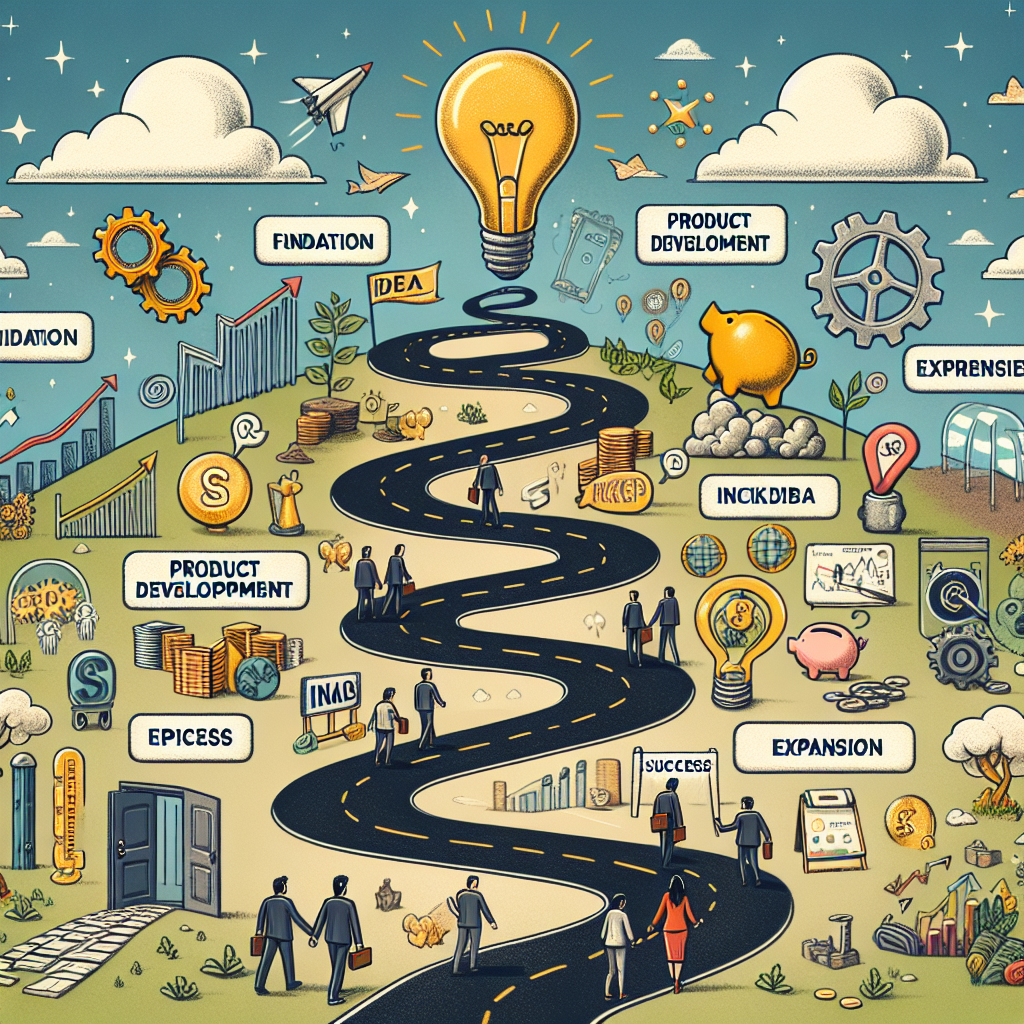
Entrepreneurship & Startups: The Road to Success
In today’s dynamic and fast-paced economy, entrepreneurship has emerged as a powerful engine of innovation, job creation, and economic growth. Startups—young, innovative companies designed to scale quickly—are at the heart of this entrepreneurial revolution. Whether it’s a college student coding a new app in a dorm room or a seasoned professional launching a fintech company, entrepreneurs are changing the world.
But what does it really take to launch and grow a successful startup? What challenges do entrepreneurs face, and how can they overcome them? In this article, we’ll dive deep into the world of entrepreneurship and startups, exploring the key phases, common hurdles, and proven strategies for success.
What Is Entrepreneurship?
At its core, entrepreneurship is the process of identifying a need or opportunity in the market and creating a business to fulfill it. Entrepreneurs are individuals who take on financial risk to bring new ideas to life. They are visionaries, problem-solvers, and risk-takers who challenge the status quo.
Entrepreneurship can take many forms, from small local businesses to high-growth startups destined for global impact. Regardless of scale, the entrepreneurial journey generally follows a similar path: identifying a problem, developing a solution, creating a business model, securing funding, and scaling the operation.
What Defines a Startup?
While all startups are businesses, not all businesses are startups. A startup is typically defined by its focus on innovation, scalability, and growth potential. Unlike traditional small businesses, which may aim for steady, long-term profits, startups often prioritize rapid growth and market disruption.
Startups usually begin with an idea that leverages technology to solve a real-world problem in a unique way. Think of companies like Uber, Airbnb, or Stripe—each started with a big idea and scaled quickly using digital platforms and venture capital.
The Startup Lifecycle
The startup journey is typically divided into several stages:
-
Ideation
This is the phase where entrepreneurs brainstorm ideas, identify market gaps, and assess the feasibility of their concepts. Market research, customer interviews, and competitive analysis are essential at this stage. -
Validation
Here, the startup tests its core assumptions by building a Minimum Viable Product (MVP). The MVP is a basic version of the product that provides enough value to attract early adopters and gather feedback. -
Formation
Once the idea is validated, the business is formally established. This includes registering the company, forming a legal structure, and assembling a founding team. -
Funding
To scale, startups often require external capital. Entrepreneurs seek funding through various channels, including bootstrapping, angel investors, venture capital, and crowdfunding. -
Growth
With funding in place, the startup focuses on customer acquisition, product development, and market expansion. This stage is marked by experimentation, iteration, and optimization. -
Scaling
At this stage, startups aim to grow rapidly while maintaining operational efficiency. This may involve hiring more employees, expanding to new markets, and optimizing technology infrastructure. -
Exit
Finally, successful startups often reach a point where founders and investors seek to realize returns. This may occur through an acquisition, merger, or initial public offering (IPO).
Key Traits of Successful Entrepreneurs
Entrepreneurs come from all walks of life, but successful ones often share certain characteristics:
- Resilience: The ability to bounce back from failure and keep going.
- Vision: A clear idea of what they want to achieve and why.
- Adaptability: Willingness to pivot when necessary.
- Leadership: Inspiring and managing teams effectively.
- Risk tolerance: Making calculated decisions in the face of uncertainty.
Common Challenges Faced by Startups
While the rewards of entrepreneurship can be immense, the journey is fraught with challenges:
-
Funding Shortages
Raising capital is one of the biggest hurdles. Investors are selective, and many startups struggle to attract funding. -
Market Fit
Many startups fail because they build products that customers don’t want. Finding product-market fit is critical. -
Team Dynamics
Building the right team can make or break a startup. Misalignment among co-founders or poor hiring decisions can derail progress. -
Competition
Startups often face fierce competition from both incumbents and other new entrants. -
Legal and Regulatory Issues
Navigating laws, regulations, and compliance requirements can be complex, especially in highly regulated industries. -
Burnout
The intense pressure of running a startup can lead to mental and physical exhaustion.
Strategies for Startup Success
While there’s no guaranteed formula, several strategies can increase a startup’s chances of success:
-
Start Small, Think Big
Build a simple MVP to test your idea without over-investing. Focus on solving one core problem effectively before expanding. -
Validate Early and Often
Engage with real customers from day one. Use their feedback to refine your product and business model. -
Build a Strong Team
Surround yourself with people who complement your skills, share your vision, and are committed to the mission. -
Focus on Culture
Establish core values and a positive company culture early. Culture influences everything from hiring to decision-making. -
Manage Finances Wisely
Cash flow is king. Keep a close eye on expenses and plan for contingencies. -
Stay Agile
Be prepared to pivot based on market feedback. The ability to adapt quickly is a major competitive advantage. -
Leverage Technology
Use technology to automate tasks, track metrics, and scale operations efficiently. -
Network Relentlessly
Build relationships with mentors, investors, and other entrepreneurs. A strong network can open doors and provide critical support.
Funding Options for Startups
Startup funding typically occurs in stages:
- Bootstrapping: Using personal savings or revenue to fund the business.
- Friends & Family: Early-stage investments from personal connections.
- Angel Investors: High-net-worth individuals who invest in startups.
- Venture Capital: Institutional investors who provide capital in exchange for equity.
- Crowdfunding: Raising small amounts from many people via platforms like Kickstarter or Indiegogo.
- Incubators & Accelerators: Programs that provide funding, mentorship, and resources.
Trends Shaping the Startup Ecosystem
The startup landscape is constantly evolving. Here are some trends influencing entrepreneurship today:
- Remote Work: Startups are leveraging remote teams to access global talent and reduce overhead costs.
- Sustainability: Eco-conscious startups are gaining traction as consumers demand greener products.
- AI & Automation: New startups are using artificial intelligence to innovate across industries.
- Fintech Revolution: Startups are disrupting traditional banking, insurance, and investment with technology.
- Healthtech: The pandemic has accelerated digital health solutions and telemedicine startups.
Case Studies of Successful Startups
-
Airbnb
Started in 2008 by Brian Chesky and Joe Gebbia, Airbnb began as a simple idea to rent out air mattresses in their apartment to make extra money. Today, it’s a global hospitality brand worth billions. -
Slack
Originally developed as an internal tool for a gaming company, Slack pivoted to become a workplace communication platform. It was acquired by Salesforce for $27.7 billion in 2021. -
Canva
Founded in Australia, Canva democratized graphic design with an easy-to-use online platform. Today, it’s valued at over $40 billion and used by millions worldwide.
Lessons From Failure
Not all startups succeed. In fact, about 90% of startups fail. Common reasons include:
- Lack of market need
- Poor management
- Running out of cash
- Flawed business model
- Inadequate marketing
However, failure often provides valuable lessons. Many successful entrepreneurs have experienced failure before finding success. The key is to learn, adapt, and persist.
Conclusion: Embracing the Entrepreneurial Journey
Entrepreneurship and startups are not for the faint of heart. They require passion, commitment, and a willingness to embrace uncertainty. But for those who embark on this journey, the rewards—personal fulfillment, financial independence, and the opportunity to make a difference—can be extraordinary.
Whether you're just starting out or already deep into your entrepreneurial journey, remember that every successful startup began with a simple idea and the courage to pursue it. Stay focused, stay resilient, and never stop learning.
The road to success may be long and winding, but with the right mindset and strategy, it’s a journey well worth taking.