
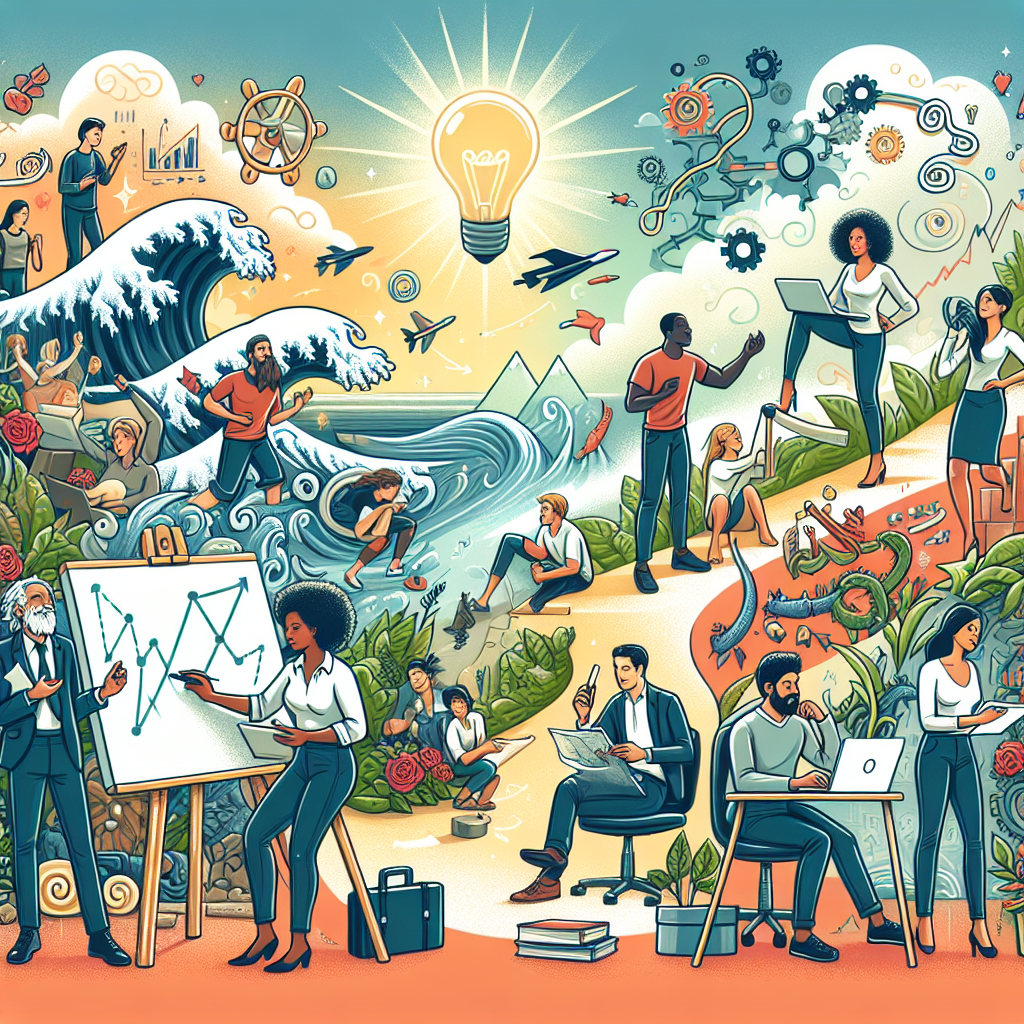
Entrepreneurship & Startups: A Journey of Innovation and Grit
Introduction
In recent years, the world has witnessed an unprecedented surge in entrepreneurship and startup activity. From Silicon Valley to emerging tech hubs in Africa and Asia, individuals with innovative ideas are taking the leap into the uncertain but exhilarating world of startups. While the allure of being your own boss and the potential for financial success are compelling, entrepreneurship is not merely about launching a business—it’s about solving problems, creating value, and embracing a mindset of resilience and adaptability.
This comprehensive article delves into the multifaceted world of entrepreneurship and startups, exploring what it takes to start, sustain, and scale a business in today’s dynamic marketplace.
Defining Entrepreneurship and Startups
Entrepreneurship is the process of designing, launching, and running a new business, typically driven by an individual or a small group (entrepreneurs) who take on most of the risk and reward. Startups are a subset of this broader concept. A startup is a young company founded to develop a unique product or service, bring it to market, and scale it rapidly.
Unlike traditional businesses, startups are typically designed to grow fast. They often operate in tech-driven industries and seek to disrupt existing markets with innovative solutions. Think of companies like Airbnb, Uber, or Stripe—they began as startups and transformed entire industries.
Why People Choose Entrepreneurship
-
Independence and Autonomy: Many entrepreneurs are driven by the desire for independence. They want to be in control of their destiny, make their own decisions, and build something that reflects their vision.
-
Passion for Innovation: Entrepreneurs are often passionate about solving a particular problem. They’re driven by curiosity and a desire to create better solutions.
-
Financial Potential: While not every startup turns into a unicorn, the potential for financial rewards is a significant motivator.
-
Impact and Legacy: Entrepreneurs often aim to make a lasting impact on society or leave a legacy that extends beyond profit.
Characteristics of Successful Entrepreneurs
Entrepreneurship is not for the faint of heart. Successful entrepreneurs tend to share several key traits:
- Resilience: The path is filled with setbacks. The ability to bounce back is crucial.
- Vision: A clear picture of where they want to go and how to get there.
- Risk-Taking: Willingness to venture into the unknown and face uncertainty.
- Adaptability: The market changes fast. Entrepreneurs must pivot when necessary.
- Leadership: The ability to inspire and manage a team.
- Financial Literacy: Understanding cash flow and managing finances effectively.
The Startup Lifecycle
Every startup goes through several phases, each with its own challenges and focus areas.
- Ideation
This is the phase where ideas are born. Entrepreneurs identify a problem worth solving and brainstorm potential solutions. Key activities include:
- Market research
- Identifying target customers
- Validating the problem
- Competitive analysis
- Validation
Before building a full-fledged product, it's essential to validate the idea. This often involves:
- Creating a Minimum Viable Product (MVP)
- Gathering user feedback
- Iterating based on feedback
- Gauging market demand
- Launch
Once the idea is validated, the startup is officially launched. This phase includes:
- Building the final product
- Marketing and promotion
- Acquiring initial users or customers
- Establishing revenue streams
- Growth
This is the most challenging yet critical phase. Focus areas include:
- Scaling operations
- Hiring talent
- Securing funding (Seed, Series A, B, etc.)
- Expanding customer base
- Maturity or Exit
Eventually, a startup reaches a mature stage or considers an exit strategy:
- IPO (Initial Public Offering)
- Acquisition by another company
- Sustained operations as a private business
Funding a Startup
Funding is often a major hurdle. Startups typically go through various funding stages:
- Bootstrapping: Using personal savings or income to fund the business.
- Friends and Family: Small investments from trusted individuals.
- Angel Investors: Wealthy individuals who invest in early-stage startups.
- Venture Capital: Institutional investors who provide capital in exchange for equity.
- Crowdfunding: Raising small amounts of money from a large number of people, usually online.
Each stage of funding comes with its own expectations and responsibilities, especially when giving up equity in the company.
Challenges Entrepreneurs Face
-
Uncertainty: There is no guaranteed success. Entrepreneurs must be comfortable with ambiguity.
-
Financial Pressure: Many startups operate at a loss initially. Managing burn rate and runway is crucial.
-
Hiring and Team Building: Assembling the right team is both difficult and essential.
-
Competition: New entrants and established players can be formidable rivals.
-
Time Management: Entrepreneurs often wear multiple hats and must juggle numerous responsibilities.
-
Regulatory Hurdles: Navigating legal and compliance issues can be complex, especially in regulated industries.
The Role of Technology
Technology is a key enabler for modern startups. It allows for:
- Rapid prototyping and testing
- Scalable infrastructure (e.g., cloud computing)
- Efficient marketing via social media and digital platforms
- Easy access to global markets
Moreover, the rise of low-code and no-code platforms has democratized the ability to build digital products, enabling even non-technical founders to launch tech startups.
Ecosystem and Support for Startups
The startup ecosystem includes incubators, accelerators, co-working spaces, mentors, and government initiatives aimed at nurturing new businesses. Some notable components include:
- Incubators: Offer resources and mentorship to early-stage startups.
- Accelerators: Provide intensive programs, often culminating in demo days.
- Co-working Spaces: Foster community and reduce overhead costs.
- Government Grants: Financial and tax incentives for innovation.
- University Programs: Offer education and funding for student startups.
Success Stories and Lessons Learned
Let’s take a look at a few success stories and what aspiring entrepreneurs can learn from them:
-
Airbnb
Founded by Brian Chesky and Joe Gebbia, Airbnb started when the founders rented air mattresses in their apartment to conference attendees. The key takeaway? Solve a real problem (affordable lodging) and scale thoughtfully. -
Dropbox
Started as a simple demo video, Dropbox validated demand before building a full product. Lesson: Validate before you build. -
Spanx
Sara Blakely launched Spanx with $5,000 of her savings and no outside funding. Her story shows the power of perseverance and customer empathy. -
Canva
An Australian startup, Canva democratized design with an easy-to-use platform. Co-founder Melanie Perkins focused on user-centric design and global scalability.
Failure is Part of the Process
Not all startups succeed. In fact, the majority fail. Common reasons include:
- Lack of market need
- Running out of cash
- Poor team dynamics
- Ineffective marketing
- Ignoring customer feedback
However, failure is often a stepping stone. Many successful entrepreneurs failed multiple times before finding success. The key is to learn, iterate, and keep going.
The Future of Entrepreneurship
The landscape is evolving rapidly:
- Remote Work: Enables startups to tap into global talent pools.
- Sustainability: More startups are focusing on eco-friendly solutions.
- AI and Automation: Creating new opportunities and efficiencies.
- Diversity and Inclusion: Increasing awareness and support for underrepresented founders.
- Globalization: Startups now have access to international markets from day one.
Conclusion
Entrepreneurship and startups are powerful engines of innovation, job creation, and economic growth. While the journey is fraught with challenges, it also offers unmatched opportunities for those willing to take risks and persevere.
Whether you're contemplating your first startup or already on your entrepreneurial path, remember that success requires more than just a great idea. It demands relentless execution, customer empathy, and the courage to keep going when things get tough.
In the words of Reid Hoffman, co-founder of LinkedIn, “An entrepreneur is someone who jumps off a cliff and builds a plane on the way down.”
Are you ready to take the leap?