
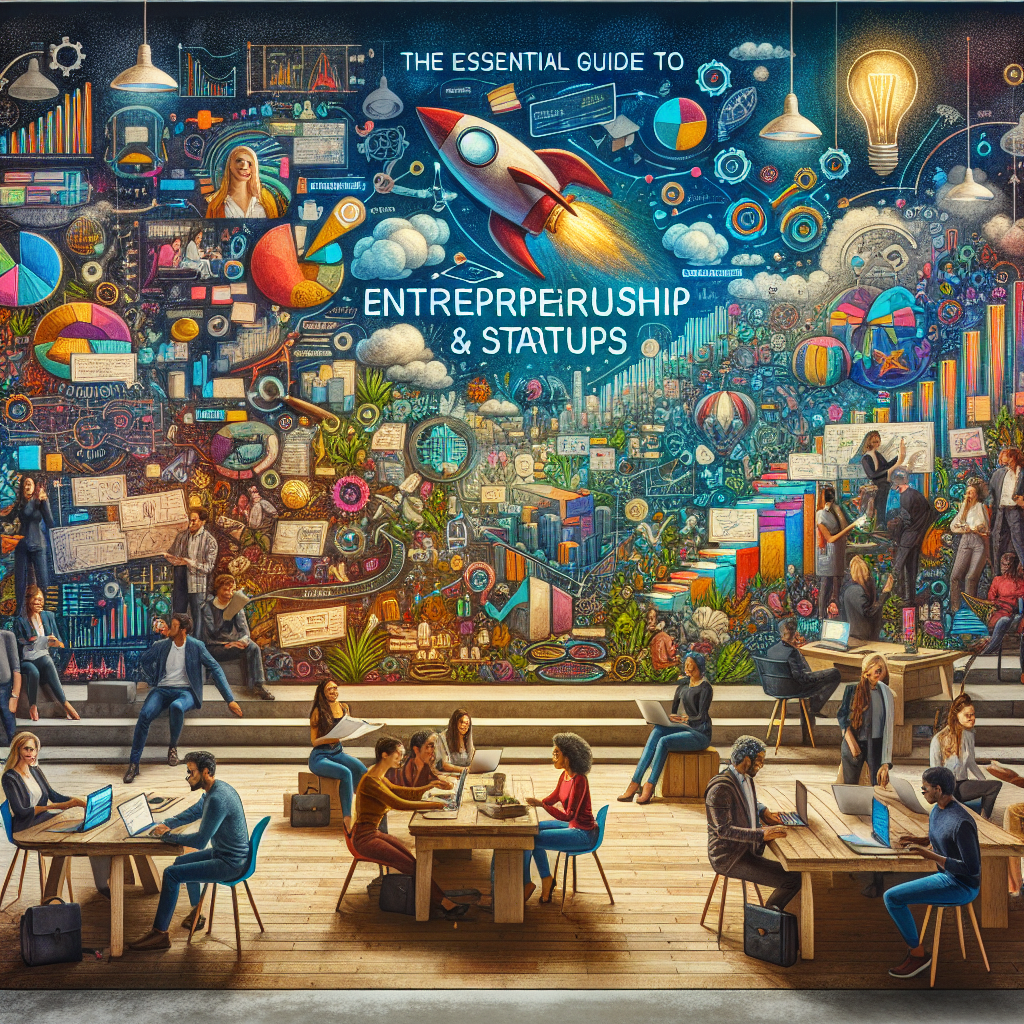
Entrepreneurship and startups have become cornerstone concepts in today’s global economy. With the rise of technology, access to resources, and a growing culture of innovation, more people than ever are leaving traditional employment to start their own ventures. But what does it truly mean to be an entrepreneur? What challenges do startups face, and how can they position themselves for long-term success?
This comprehensive guide explores the world of entrepreneurship and startups, offering insights into the creation, development, and scaling of a new business. Whether you're an aspiring entrepreneur or a seasoned founder looking to refine your approach, this article will provide practical knowledge and strategic depth.
What is Entrepreneurship?
Entrepreneurship is the process of designing, launching, and managing a new business, often initially a small business, with the goal of turning a profit or making a significant impact. Entrepreneurs are individuals who identify a need in the market and create products or services to meet that need.
Entrepreneurship involves creativity, risk-taking, innovation, and the ability to execute a vision. While it can be rewarding, it also requires resilience and a willingness to face uncertainty.
Defining a Startup
A startup is a company in the initial stages of operations, typically characterized by high uncertainty and innovation. Unlike traditional small businesses, startups are built to scale rapidly. They often aim to disrupt existing markets or create entirely new ones.
Startups are usually funded by their founders at first, with additional capital often sourced from angel investors, venture capitalists, or crowdfunding platforms.
The Entrepreneurial Mindset
Successful entrepreneurs often share several key traits:
- Vision: The ability to see opportunities where others don’t.
- Risk Tolerance: Willingness to take calculated risks.
- Resilience: Ability to recover from setbacks.
- Adaptability: Willingness to pivot and change direction.
- Leadership: Capacity to inspire and lead a team.
- Problem-Solving: Aptitude for finding creative solutions.
Cultivating this mindset is crucial for navigating the unpredictable terrain of launching and growing a startup.
The Stages of a Startup
1. Ideation
This is the conceptual stage where entrepreneurs brainstorm, identify problems, and generate ideas. Market research and validation are essential here to ensure there's a real demand for the product or service.
2. Validation
Once an idea is formed, it must be tested. This involves building a Minimum Viable Product (MVP), gathering feedback, and determining whether the idea has the potential to succeed.
3. Formation
At this stage, the business is legally established. Founders begin building a team, forming a company structure, and creating a business plan.
4. Funding
Most startups require capital to grow. Entrepreneurs may seek funding from:
- Personal savings
- Friends and family
- Angel investors
- Venture capital
- Crowdfunding platforms
5. Product Development
The MVP evolves into a more complete product based on user feedback. This phase involves refining the product, improving user experience, and preparing for market entry.
6. Market Entry
The startup begins marketing the product to a wider audience. This stage includes customer acquisition, sales, branding, and scaling operations.
7. Growth and Scaling
If the startup gains traction, the focus shifts to growth. This includes expanding the team, entering new markets, and optimizing operations to scale efficiently.
8. Maturity or Exit
Eventually, startups either become sustainable businesses or pursue an exit strategy such as acquisition, merger, or IPO (Initial Public Offering).
Common Challenges Faced by Startups
1. Funding
Many startups struggle to secure adequate funding, especially in early stages. Without a solid financial foundation, it’s difficult to scale or even survive.
2. Market Fit
Even great ideas can fail if there isn’t a real market need. Achieving product-market fit is critical for sustainability.
3. Competition
Startups often face stiff competition from established players and other new entrants. Differentiation is key to standing out.
4. Hiring the Right Team
A great idea is only as strong as the team behind it. Attracting and retaining skilled, motivated employees is a major challenge.
5. Time Management
With limited resources, founders must wear multiple hats. Prioritizing tasks and managing time effectively is vital.
6. Legal and Regulatory Issues
Startups must navigate complex legal landscapes, including business registration, contracts, taxes, and intellectual property.
Strategies for Startup Success
1. Start with a Clear Problem
The best startups solve real problems. Begin by identifying a specific pain point and ensuring your solution addresses it effectively.
2. Validate Early and Often
Use lean startup principles to test your idea quickly and cheaply. Get feedback from real users and iterate accordingly.
3. Build a Strong Team
Surround yourself with people whose skills complement yours. A strong, cohesive team can overcome many of the hurdles startups face.
4. Focus on Customers
Customer-centricity is non-negotiable. Listen to feedback, improve your product, and build loyalty.
5. Manage Finances Prudently
Avoid unnecessary expenses in the early stages. Keep a close eye on cash flow and ensure you have a financial cushion.
6. Leverage Technology
Use automation tools, cloud services, and other technology to streamline operations and enhance productivity.
7. Network and Seek Mentorship
Connect with other entrepreneurs, investors, and industry experts. Their experiences can offer valuable insights and open doors.
8. Prepare for Failure
Not all startups succeed, but every experience offers lessons. Be prepared to pivot, and don’t be afraid to move on if necessary.
Case Studies: Real-World Startup Successes
Airbnb
Founded in 2008, Airbnb began as a way to help the founders pay their rent. They started by renting air mattresses in their apartment. By solving a common traveler problem—expensive and impersonal hotels—they built a platform that now lists millions of properties worldwide.
Dropbox
Dropbox started as a simple demo video explaining cloud storage. The video attracted thousands of early adopters before the product was even built, validating the market need early on.
Slack
Originally a gaming company, the team behind Slack pivoted when they realized their internal communication tool had broader potential. Now, Slack is a leading communication platform for businesses globally.
The Role of Innovation in Startups
Innovation is at the heart of every successful startup. This doesn’t always mean groundbreaking technology—it can also be a new way of delivering services, a novel business model, or an improved customer experience.
Startups often have the advantage of agility, allowing them to experiment and innovate more freely than larger enterprises. Encouraging a culture of experimentation can lead to breakthroughs that drive growth.
The Global Impact of Startups
Startups play a crucial role in job creation, economic development, and technological advancement. From Silicon Valley to Nairobi, startups are solving local and global problems, driving competition, and shaping the future of work.
Governments and institutions increasingly recognize this, offering support through incubators, grants, and policy frameworks that foster entrepreneurship.
The Future of Entrepreneurship
The landscape of entrepreneurship is constantly evolving. Key trends shaping the future include:
- Remote Work: Startups can now build global teams from day one.
- AI and Automation: Entrepreneurs are leveraging AI to streamline operations and create smarter products.
- Sustainability: Eco-friendly and socially responsible startups are gaining traction.
- Diversity and Inclusion: There is growing support for underrepresented founders.
Conclusion
Entrepreneurship and startups are more than buzzwords—they represent a powerful force for innovation, economic growth, and societal change. While the journey is challenging, it is also immensely rewarding for those who are prepared, adaptable, and resilient.
By understanding the stages of startup development, cultivating the right mindset, and applying strategic principles, aspiring entrepreneurs can increase their chances of building successful, impactful businesses.
Whether you’re in the idea phase or scaling your venture, remember that entrepreneurship is not a destination—it’s a continuous journey of learning, adapting, and growing. Embrace the process, and the possibilities are limitless.