
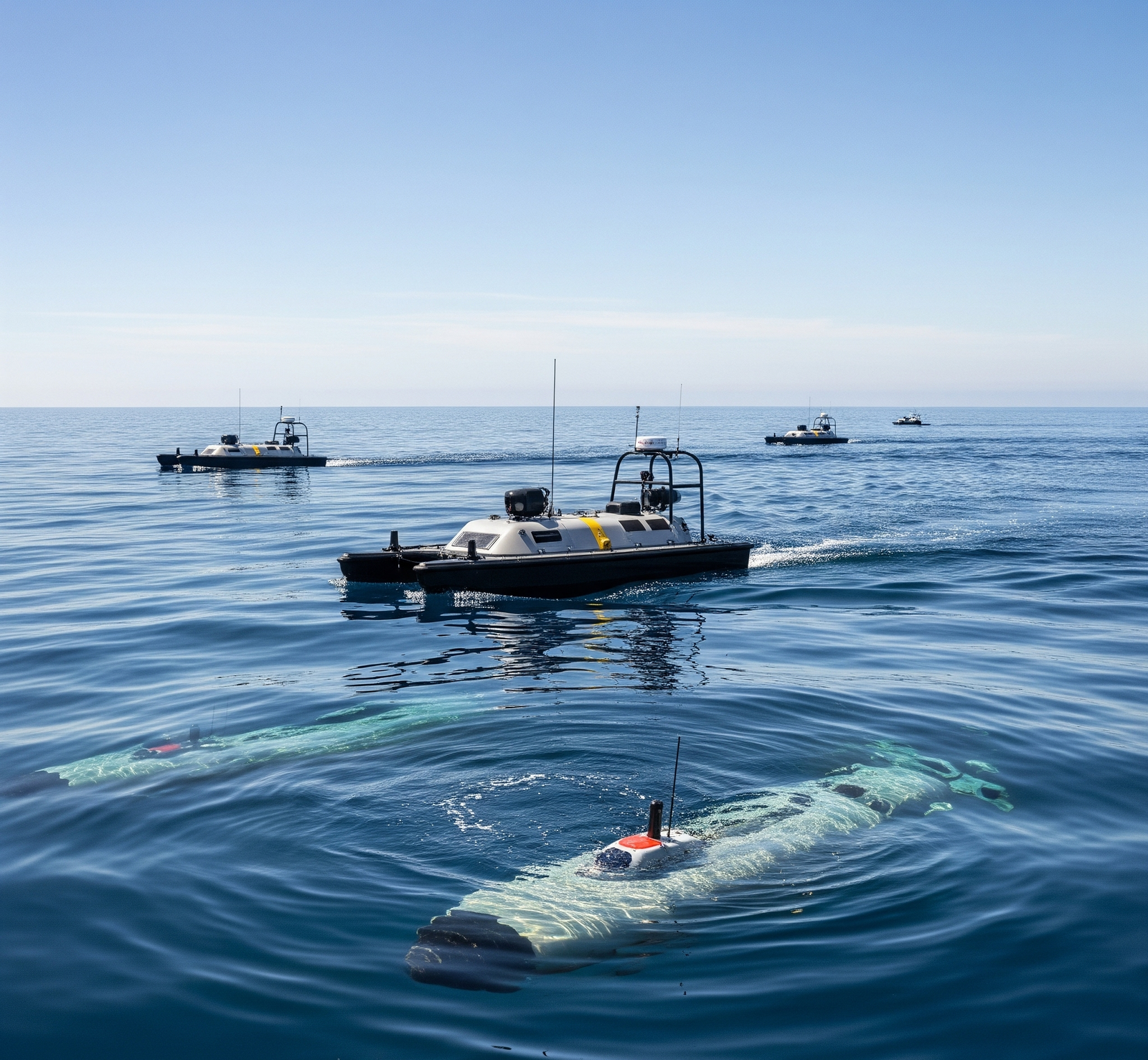
The recent drone conflicts between Iran and Israel have forcefully marked a turning point in modern warfare: autonomy is no longer futuristic, it’s a present-day reality. This emerging paradigm highlights a critical strategic imperative: nations mastering unmanned maritime technologies will inevitably gain decisive advantages in global influence, economic security, and geopolitical stability.
Redefining Sea Power in the Autonomous Age: Historically, Alfred Thayer Mahan defined sea power as control over maritime commerce routes, essential to global dominance. Today, his theories gain fresh relevance as unmanned systems reshape traditional naval dynamics. While aerial drones dominate headlines, the future battleground increasingly extends beneath and above ocean waves through Unmanned Surface Vehicles (USVs) and Unmanned Underwater Vehicles (UUVs).
Recent international incidents emphasize the profound vulnerabilities of maritime infrastructure, including global shipping routes, ports, offshore energy facilities, and critical undersea communications cables. Conventional methods are proving insufficient against increasingly sophisticated threats. Autonomous maritime systems offer advanced surveillance capabilities, persistent presence, and rapid responsiveness, significantly enhancing security measures in complex operational environments.
Strategic Advantages of Autonomous Maritime Vehicles: Autonomous maritime technology directly confronts several strategic imperatives:
- Persistent and Uninterrupted Surveillance: Autonomous systems enable continuous, real-time monitoring of vast maritime regions, ensuring immediate detection and response to emerging threats.
- Enhanced Cost Efficiency and Human Safety: Deploying autonomous vessels reduces operational risks and financial expenditures by limiting human exposure to hazardous and conflict-prone zones.
- Operational Flexibility and Multi-Mission Adaptability: Autonomous platforms seamlessly transition between environmental monitoring, infrastructure security, disaster response, and strategic reconnaissance missions, maximizing operational versatility and resource utilization.
The declining emphasis on direct human involvement in modern conflicts, prioritizing the protection of human life, further underscores the strategic value of autonomous systems. Additionally, the autonomous maritime market remains remarkably open, offering extensive opportunities for innovation and market entry. Success in this competitive landscape hinges on providing affordable, cyber-resilient, and easily deployable systems.
Clean Oil’s Strategic Pivot, Balancing Environment and Security: Initially, our mission at Clean Oil revolved around environmental protection—deploying autonomous systems to efficiently manage oil spills, monitor ecosystems, and safeguard water quality. However, the evolving geopolitical landscape has driven a strategic pivot, positioning our technology uniquely at the intersection of environmental stewardship and national security.
Distinctive capabilities of Clean Oil’s advanced autonomous systems include:
- Robust Independent Navigation: Capable of sustained operation in GPS-denied environments, vital for strategic operations in contested waters.
- Adaptive Payload Management: Quick interchangeability between ecological sensors and sophisticated surveillance apparatus.
- Extended Operational Durability: Ensuring long-term missions without interruption, crucial for consistent and reliable maritime security operations.
Emerging Market and Global Leadership: Revisiting Mahan’s theory through the lens of technological innovation underscores a modern maritime strategy integrating autonomy as a cornerstone of geopolitical influence. Nations investing proactively in these technologies will establish new benchmarks for maritime security, economic protection, and environmental sustainability, shaping global standards and leadership.
Conclusion: The rapid progression of autonomous maritime technologies is subtly but decisively altering global power structures. As nations and corporations vie for dominance in this nascent yet critical field, the crucial question arises: Who will lead, and who will follow? Our actions today determine not only our preparedness for future challenges but also our ability to shape them.