
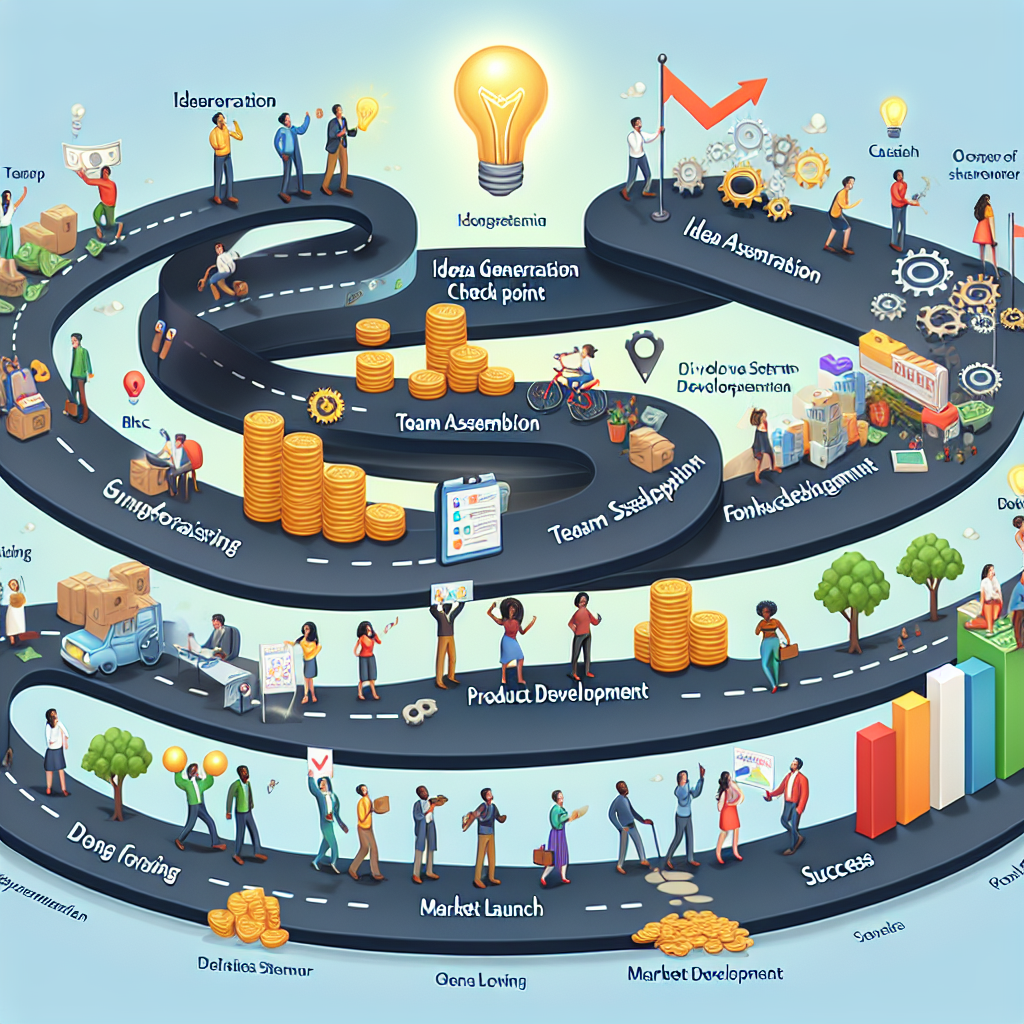
Entrepreneurship and startups have become defining forces of the modern economy. From Silicon Valley tech giants to small-town innovators, the entrepreneurial spirit drives innovation, job creation, and economic growth. But behind every success story lies a journey filled with risks, failures, learning curves, and resilience. In this comprehensive guide, we delve into the multifaceted world of entrepreneurship and startups, exploring their fundamentals, challenges, strategies for success, and the evolving ecosystem that supports them.
Understanding Entrepreneurship
Entrepreneurship is more than starting a business. It’s about identifying problems, creating solutions, and delivering value in a way that is scalable and sustainable. Entrepreneurs are visionaries who challenge the status quo, take calculated risks, and often operate under uncertainty. They are driven by passion, purpose, and the potential to make an impact.
The key characteristics of successful entrepreneurs include:
- Innovation: They think creatively and come up with novel ideas.
- Risk tolerance: They’re willing to face financial and personal risks.
- Resilience: They bounce back from failure and continue to adapt.
- Vision: They have a clear goal and long-term perspective.
- Execution: They turn ideas into action and manage resources effectively.
What Defines a Startup?
A startup is a young company founded to develop a unique product or service, bring it to market, and scale quickly. Unlike traditional businesses, startups are designed for rapid growth and often rely on external funding to fuel their expansion. They typically operate in technology-driven sectors, but startups can emerge in any industry where innovation is possible.
Startups are characterized by:
- Scalability: The potential to grow rapidly with minimal incremental cost.
- Disruption: Challenging existing markets or creating entirely new ones.
- Uncertainty: Operating without a proven business model or predictable outcomes.
- Agility: Quickly adapting to market feedback and changes.
The Startup Lifecycle
The journey of a startup can be divided into several stages:
1. Ideation
This is the initial phase where entrepreneurs identify a problem and brainstorm innovative solutions. Market research, validation, and feedback are crucial here.
2. Validation
At this stage, entrepreneurs build a minimum viable product (MVP) to test their idea in the market. They gather user feedback, refine their offering, and determine if there’s a product-market fit.
3. Funding
Once the idea is validated, startups seek capital to scale. Funding can come from personal savings, friends and family, angel investors, venture capitalists, or crowdfunding.
4. Growth
With funding secured, startups focus on customer acquisition, expanding the team, and scaling operations. Metrics like revenue growth, customer retention, and market share become key indicators of success.
5. Maturity or Exit
Eventually, startups either become stable businesses or exit through acquisition, merger, public offering (IPO), or sometimes, closure. Each path has its own implications for founders and investors.
Challenges Entrepreneurs Face
Entrepreneurship is rewarding but fraught with challenges. Here are some of the most common obstacles:
- Access to Capital: Securing funding is one of the most significant hurdles, especially for first-time founders and underrepresented groups.
- Market Competition: Standing out in a crowded marketplace requires a clear value proposition and strong execution.
- Talent Acquisition: Attracting and retaining skilled employees is critical but difficult, especially in early stages.
- Regulatory Hurdles: Navigating legal and regulatory requirements can be complex and time-consuming.
- Burnout: Long hours, high stress, and uncertainty can take a toll on mental and physical well-being.
Strategies for Startup Success
While there’s no guaranteed formula for success, certain strategies can significantly improve the odds:
1. Start with a Strong Problem Statement
Successful startups solve real problems. Begin with thorough market research to understand customer pain points and validate demand before building a solution.
2. Build a Minimum Viable Product (MVP)
An MVP allows startups to test their hypothesis with minimal resources. It helps gather feedback, iterate quickly, and avoid costly mistakes.
3. Focus on Customer Experience
Customer feedback should be at the center of product development. Creating a seamless and delightful user experience builds trust and loyalty.
4. Assemble the Right Team
A startup’s success heavily depends on its team. Founders should complement each other’s skills and share a common vision. Hiring passionate and adaptable team members is equally vital.
5. Leverage Mentorship and Networks
Mentors bring valuable insights, industry connections, and experience. Participating in startup incubators, accelerators, and networking events can open doors and provide critical support.
6. Embrace Agility and Pivoting
Markets change, and assumptions can be wrong. Being open to pivoting—changing the product, target audience, or business model—based on data and feedback is essential.
7. Manage Finances Prudently
Cash flow is the lifeline of a startup. Budgeting, tracking expenses, and maintaining a runway (how long the startup can operate before needing more funding) are key to survival.
The Role of Technology in Entrepreneurship
Technology has democratized entrepreneurship. With access to cloud computing, e-commerce platforms, digital payment systems, and social media, launching a business is more accessible than ever. Tech tools enable lean operations, data-driven decision-making, and global reach.
Emerging technologies like artificial intelligence (AI), blockchain, and the Internet of Things (IoT) are creating new opportunities and disrupting traditional industries.
Funding Options for Startups
Raising capital is a pivotal aspect of startup growth. Some of the common funding sources include:
- Bootstrapping: Using personal savings or revenue to fund operations.
- Angel Investors: High-net-worth individuals who invest in early-stage startups.
- Venture Capital (VC): Institutional investors who provide capital in exchange for equity, typically in high-growth startups.
- Crowdfunding: Raising small amounts of money from a large number of people via platforms like Kickstarter or Indiegogo.
- Accelerators and Incubators: Programs that offer funding, mentorship, and resources in exchange for equity or participation.
The Global Startup Ecosystem
The startup ecosystem comprises various stakeholders, including entrepreneurs, investors, mentors, support organizations, and governments. Cities like San Francisco, Bengaluru, London, Tel Aviv, and Berlin have become global startup hubs due to their access to talent, capital, and infrastructure.
Governments are increasingly recognizing the importance of startups and are offering incentives like tax benefits, grants, and startup-friendly regulations. Universities and research institutions also play a crucial role by fostering innovation and entrepreneurship.
Social and Impact Entrepreneurship
Not all entrepreneurs are driven solely by profit. Social entrepreneurs aim to create positive social or environmental change while maintaining financial sustainability. Impact startups often focus on areas like education, healthcare, clean energy, and financial inclusion.
The rise of conscious consumerism has further amplified the demand for businesses that align with ethical and sustainable values.
Lessons from Successful Entrepreneurs
Entrepreneurs like Elon Musk, Sara Blakely, Jack Ma, and others have paved the way with their innovations and grit. Some key takeaways from their journeys include:
- Think big, start small: Even the most ambitious visions begin with a single step.
- Embrace failure: Mistakes are inevitable; learning from them is what counts.
- Stay customer-focused: Solving real problems for real people is the essence of value creation.
- Build a strong culture: Company culture drives behavior, performance, and long-term success.
The Future of Entrepreneurship
The entrepreneurial landscape is constantly evolving. Remote work, digital transformation, and globalization are reshaping how startups operate. The rise of the gig economy, creator economy, and solopreneurship is enabling individuals to build businesses on their own terms.
Additionally, diversity and inclusion are becoming central to innovation. Empowering women, minorities, and underrepresented groups in entrepreneurship is not just a social imperative—it’s a business one.
Conclusion
Entrepreneurship and startups are more than buzzwords—they are engines of progress and change. While the journey is fraught with challenges, it offers unmatched opportunities for growth, fulfillment, and impact. Whether you’re an aspiring founder, an investor, or simply curious about the startup world, understanding its dynamics is the first step toward making a meaningful contribution.
Remember, every successful startup begins with a simple idea and the courage to pursue it.